

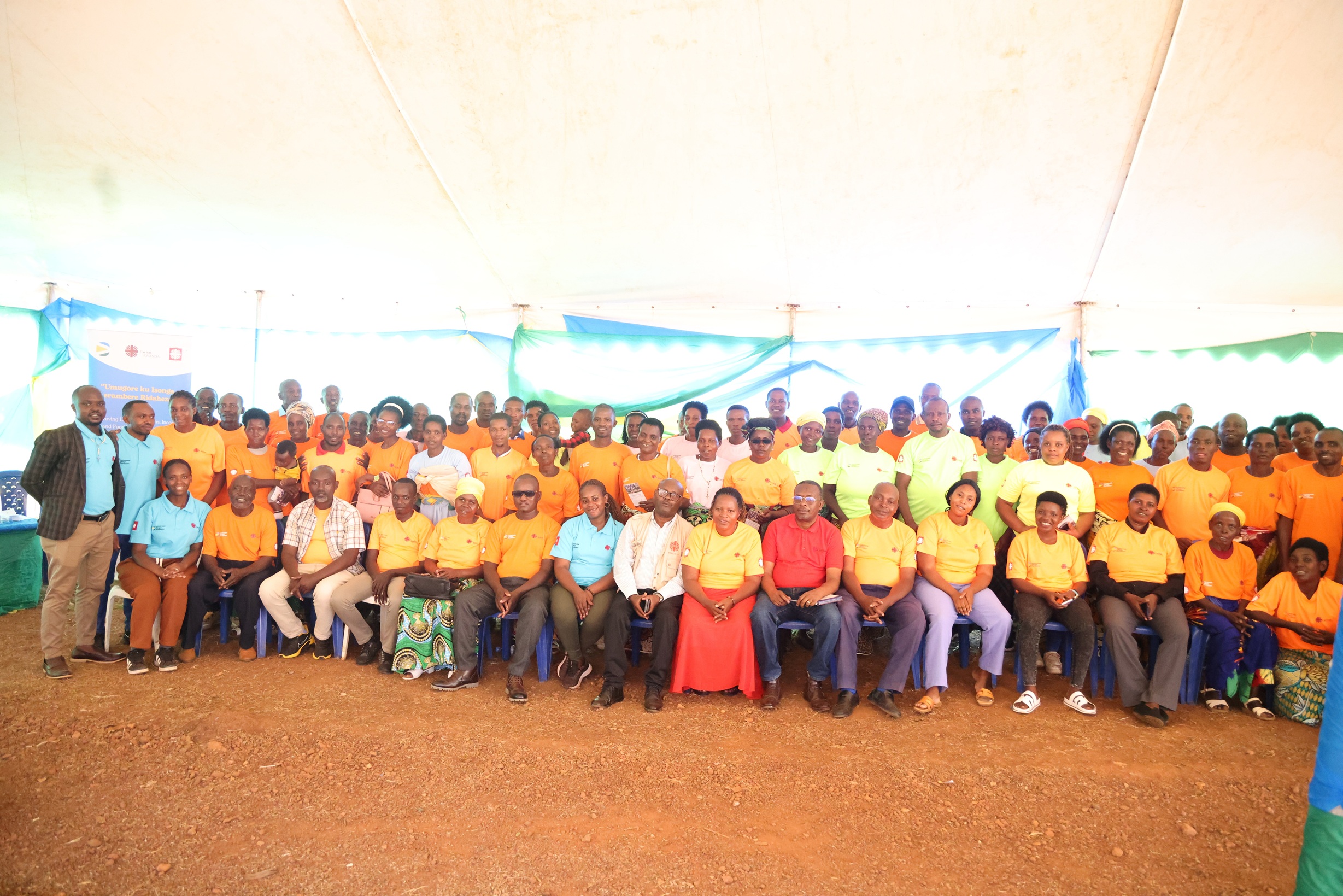
From 31 October to 6 November 2026, Rwanda marked Savings Week under the theme “Saving, a foundation of prosperity,” organised by the Ministry of Finance and Economic Planning (MINECOFIN). On 4 November, Caritas Rwanda and Caritas Kigali joined other stakeholders in Juru Sector, Bugesera District, to promote a culture of saving through the Umugore Ku Isonga, Iterambere Ridaheza Project, supported by the Sustainable Villages Foundation (SVF).
The initiative aims to strengthen household financial security by improving financial management skills, supporting savings groups to meet registration requirements and linking them with financial institutions, including SACCOs and microfinance institutions.
Speaking at the event, Cyprien Rukemanganizi, a Caritas Rwanda staff member working on the project, encouraged community members to make saving a habit and invest their money in productive activities.
“Saving should become a culture. The Government encourages you to save money, invest in income-generating activities and eventually create jobs for others,” he said, urging members to deposit their savings in financial institutions and formally register their groups.
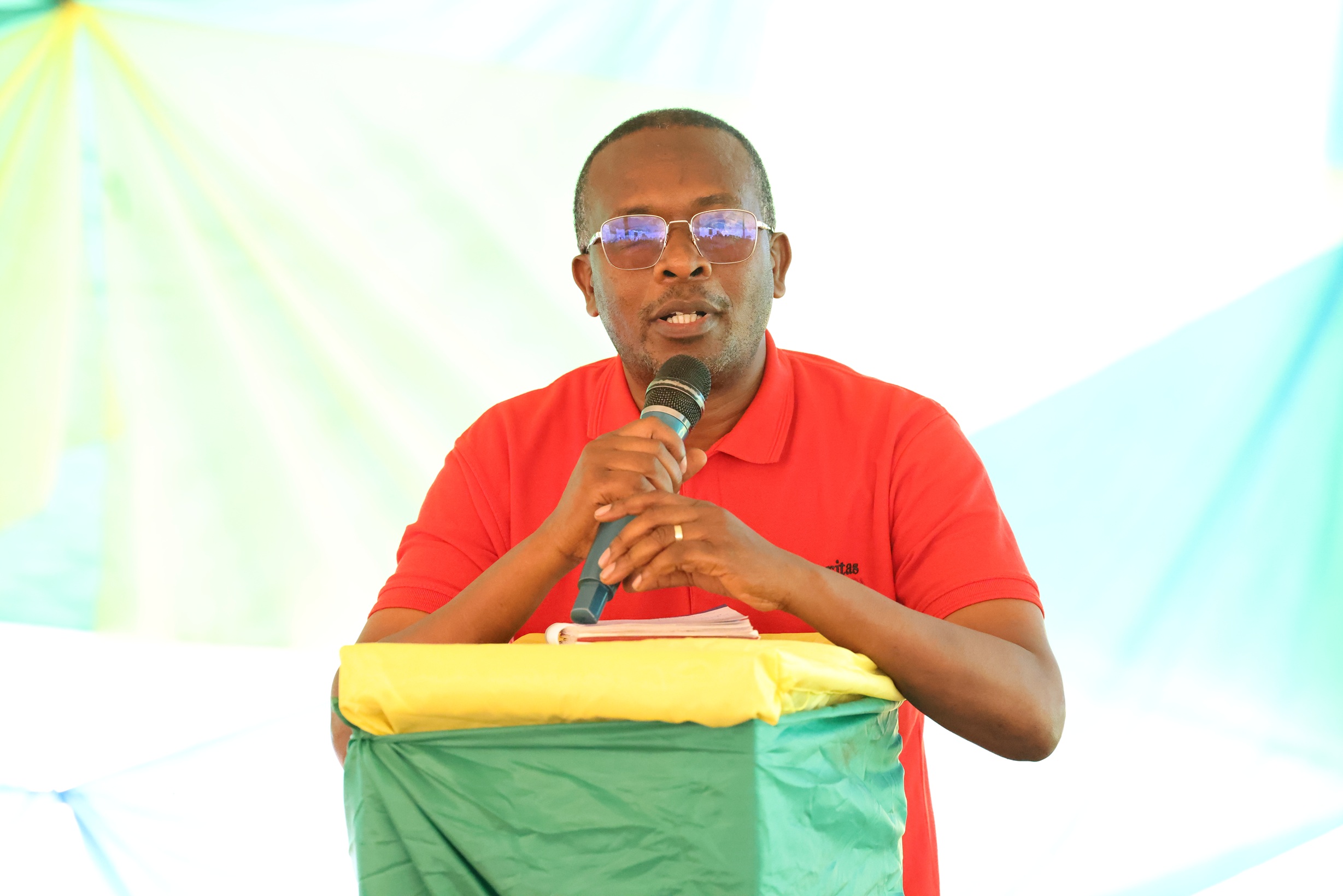
Ndagiwenimana Charles, Project Coordinator, said the initiative supports five savings and lending groups comprising 150 members, mostly women. Each group received Frw 3,840,000 to strengthen its lending activities. The project also supports 300 farming households through training in the production and use of liquid organic fertiliser made from locally available plants. Plans are also underway to construct five-tonne cooled storage facilities to help farmers preserve their produce.
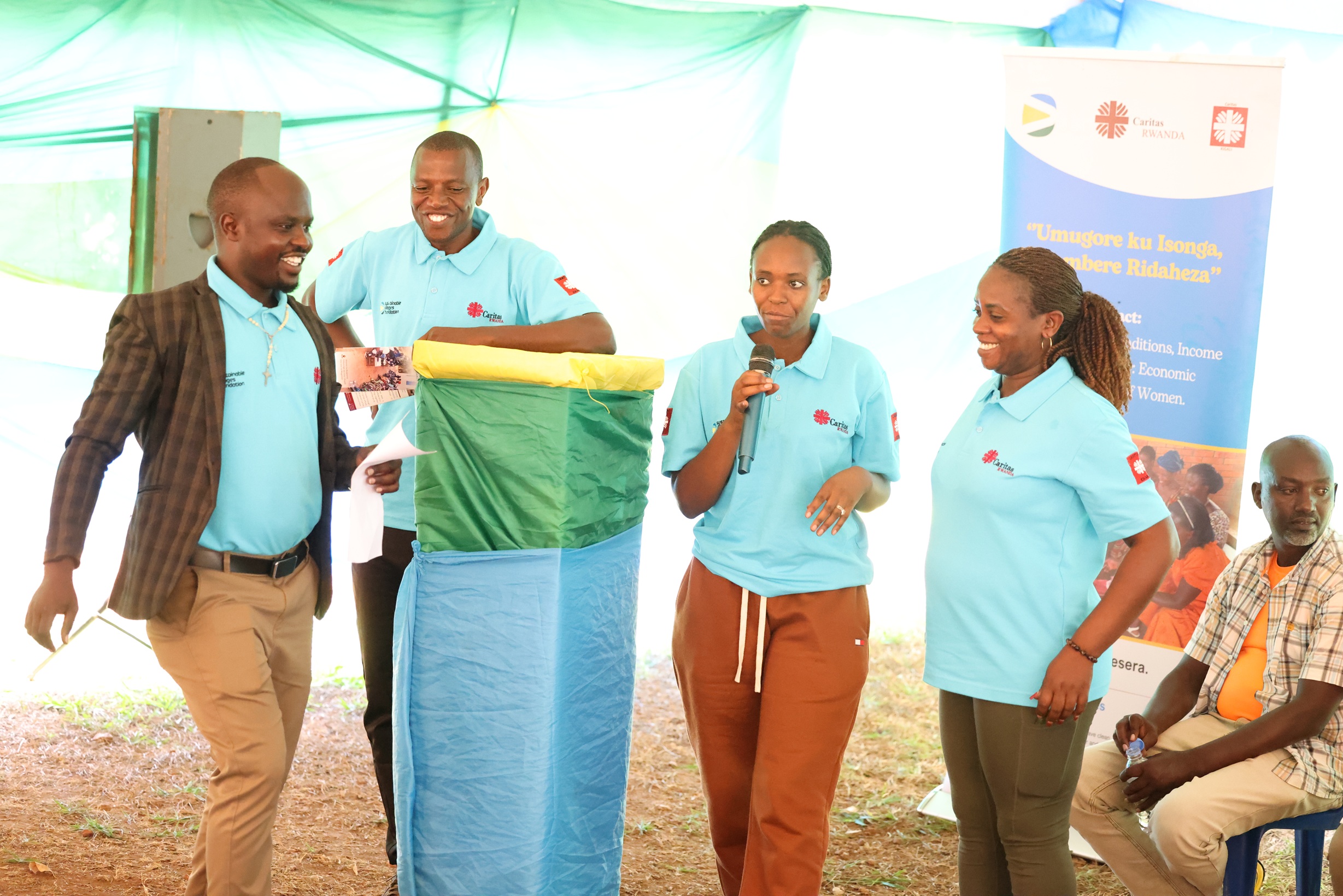
Transforming lives through saving and investment
The project’s impact is already visible in participants’ lives. Hirana Jean Damascène explained how financial support enabled him to diversify his income-generating activities. “Previously, I used a bicycle to collect fodder for my livestock. After receiving the support, I borrowed Frw 400,000 and bought a motorcycle, which I now use to transport fodder and carry passengers,” he said.
He also purchased a dairy cow producing six litres of milk daily, providing additional income to help repay his loan.
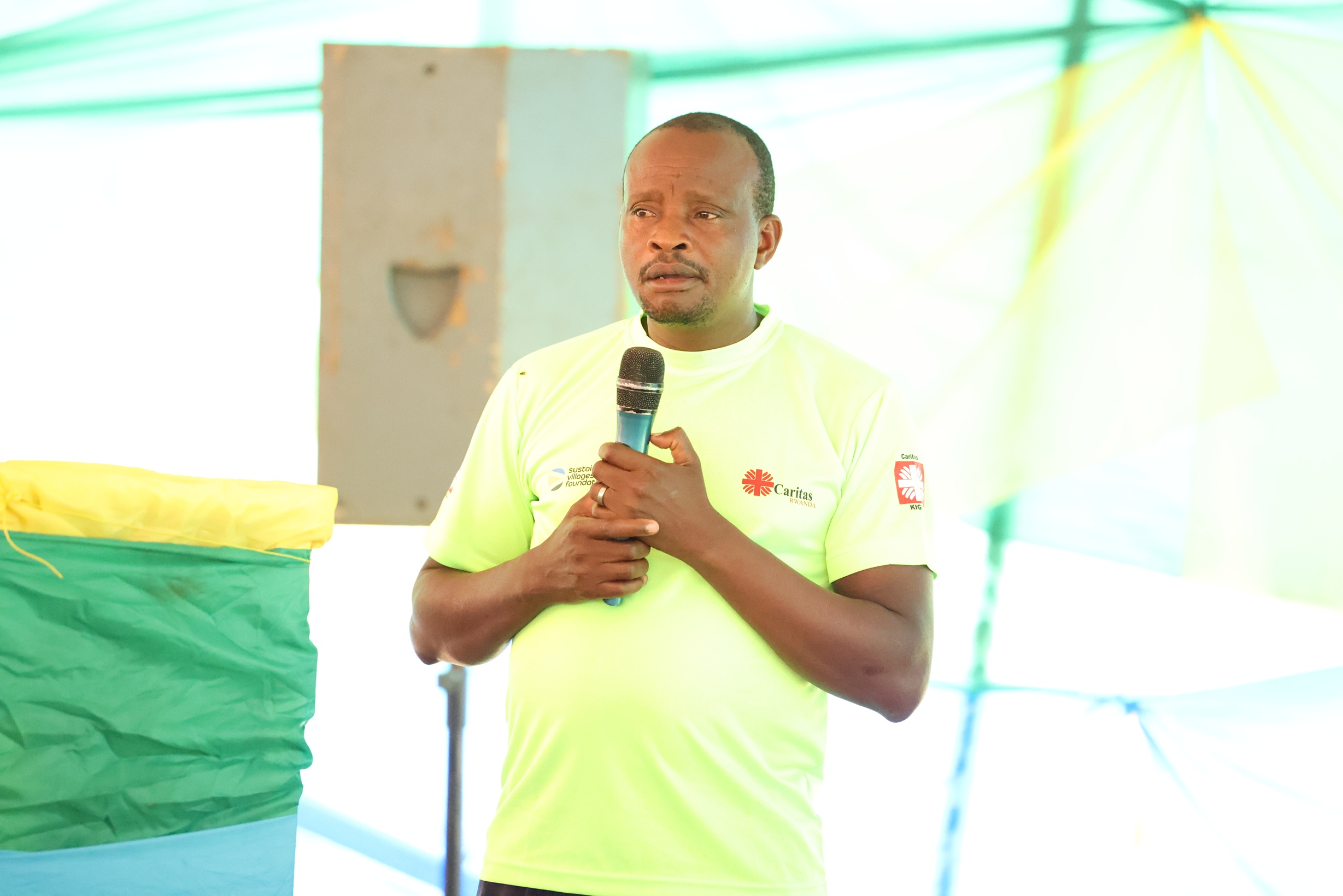
Another participant, Mukanoheli Joseline, praised the agricultural training, particularly the use of locally produced liquid organic fertiliser. “I planted eggplants and applied the liquid fertiliser. I now harvest between five and six 100-kilogramme sacks every week, selling each sack for Frw 60,000.”, she said.
Joseline added that she initially invested Frw 400,000 in her farming activities, but her earnings from eggplant production have now exceeded Frw 1 million.
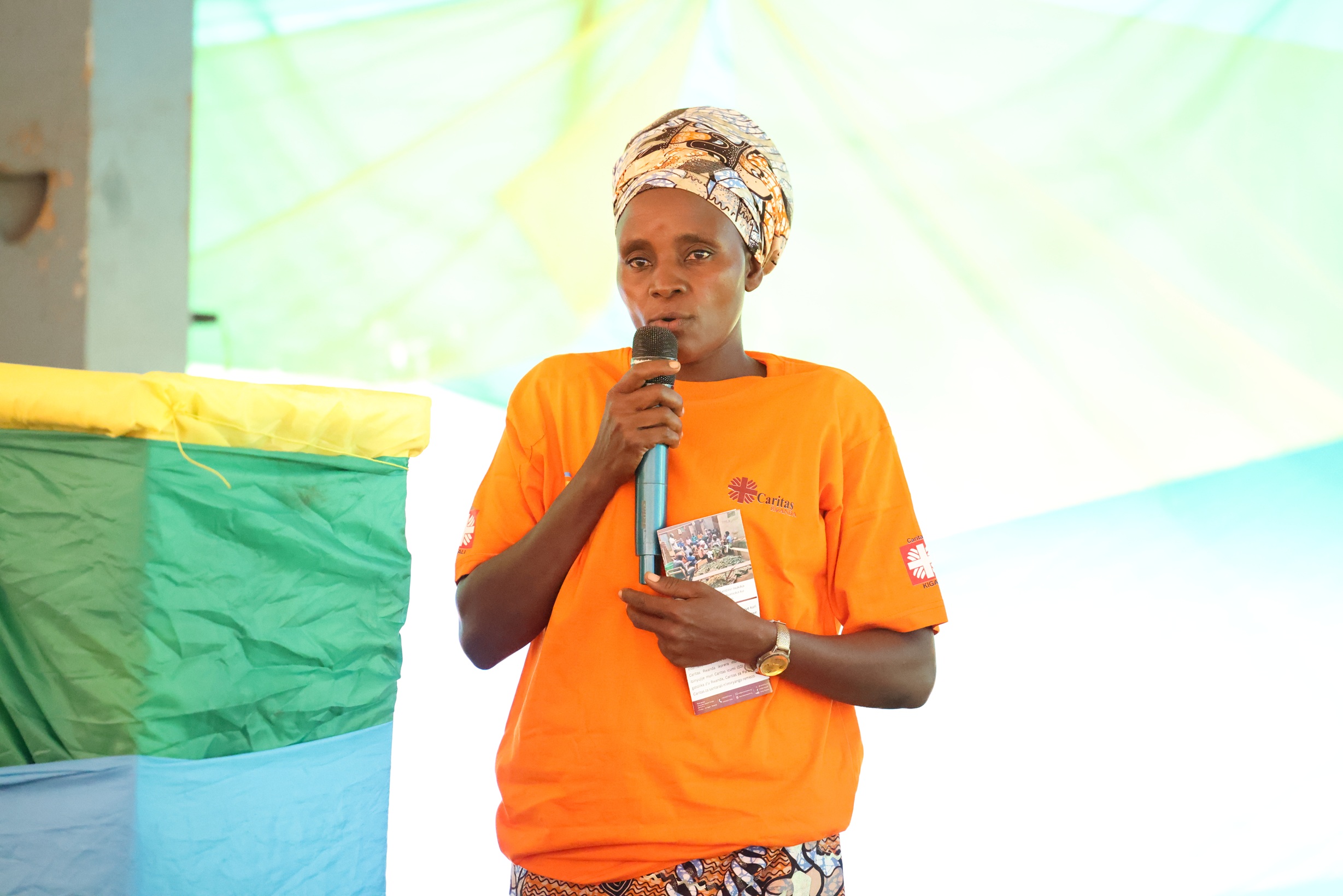
Byamungu Félix, a representative of Caritas Kigali who attended the event, encouraged the saving groups to manage their funds responsibly and continue growing their savings to strengthen their economic activities. He also urged members to maintain good relationships and solidarity, explaining that strong social ties are equally important for sustainable development.
Speaking on behalf of the Sustainable Villages Foundation, Uwera Leonille, encouraged project participants to use their savings wisely and become role models for other communities that have not yet benefited from the initiative. “Make the most of the opportunities you have been given and continue working towards improving your lives,” she urged.
Local authorities applaud the project’s achievements
Isaya James, Executive Secretary of Mugorore Cell, one of the project’s intervention areas, praised the partnership and expressed concern about the project’s planned completion in April 2027, given the positive results already achieved.
“You are valuable development partners. When you say that the project will end in April 2027, it worries us because, considering the way you are working, we were already thinking about mobilising more groups to benefit from your support. An additional five years would make a great difference. Please convey to the donors that local authorities still need your support and encourage them to extend the project to other areas,” he said.
He also urged community members to safeguard the achievements made through the project and ensure that their progress is sustained.
Habiyaremye Desiré, the Social Affairs Officer in Juru Sector, recalled that Bugesera District has set an ambitious target of lifting its population out of poverty, noting that the Umugore Ku Isonga, Iterambere Ridaheza Project is making an important contribution towards achieving this goal.
He called on community members to work hard to improve their livelihoods while developing a culture of saving, explaining that savings provide the financial foundation needed to invest in productive activities and achieve lasting economic progress.