

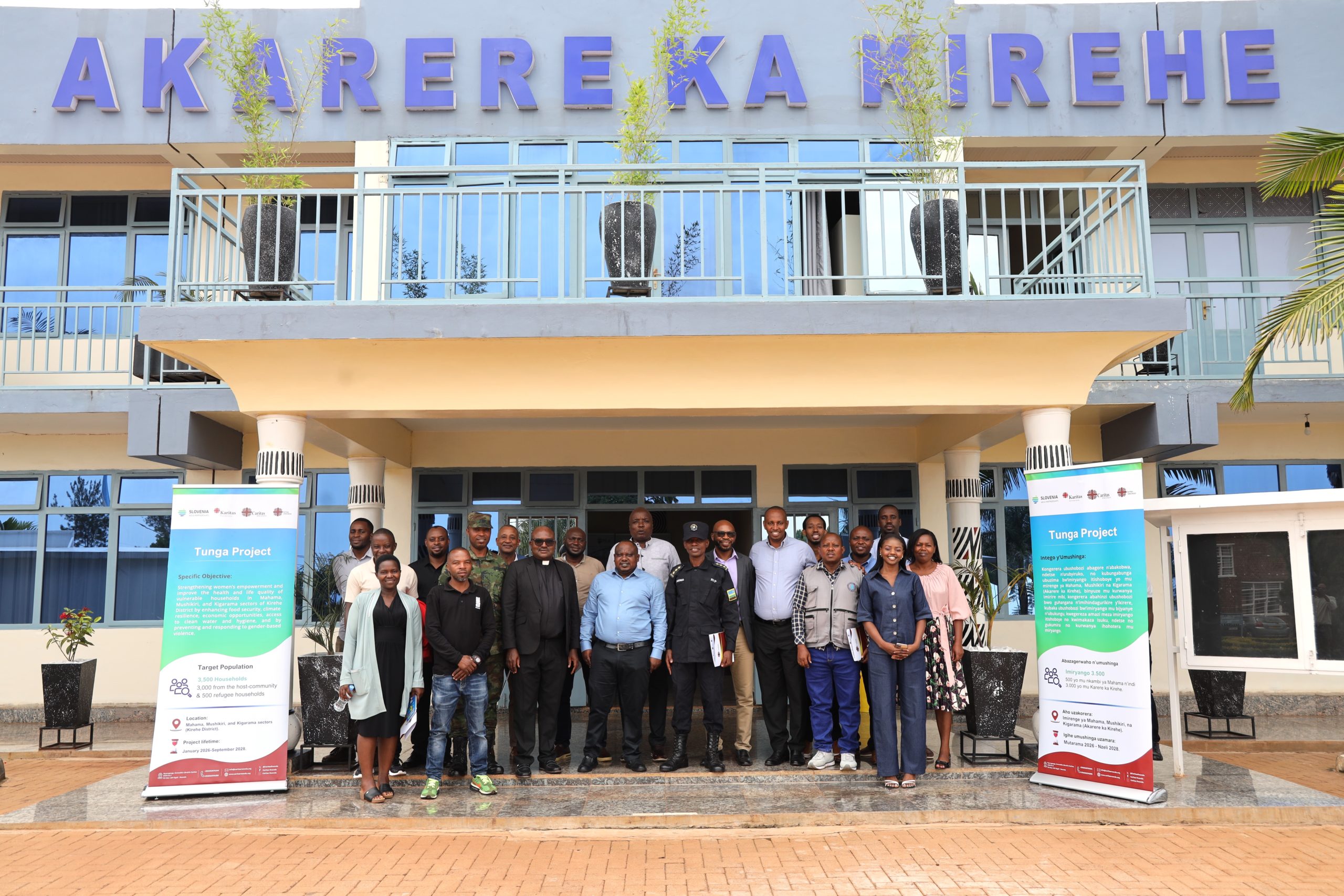
In partnership with Kirehe District, Caritas Rwanda and Caritas Kibungo officially launched the three-year Tunga Project, funded by the Slovenian Ministry of Foreign and European Affairs and Caritas Slovenia. The project aims to improve the livelihoods of 3,500 vulnerable households. The official launch took place on February 13, 2026 in one of the Kirehe District meeting halls.
The Tunga Project seeks to strengthen women’s empowerment and improve the health and life quality of vulnerable households in Mahama, Mushikiri, and Kigarama sectors of Kirehe District by enhancing food security, climate resilience, economic opportunities, access to clean water and hygiene, and by preventing and responding to gender-based violence.
The project started in January 2026 and will run until September 2028. It targets 3,500 vulnerable households, including 500 refugees from Mahama Refugee Camp and 3,000 households from the Mahama, Kigarama, and Mushikiri sectors of Kirehe District.
According to the project coordinator, Emmanuel Uwiragiye, the main planned activities include training in modern and climate-smart agriculture through farmer field schools, the distribution of livestock and improved seeds, the establishment of savings and credit groups, the provision of start-up funds for income-generating activities, and helping communities to access clean water.
In regard to modern agriculture, Tunga Project plans to use drones to produce maps that will give farmers access to timely information and make it easier for them to adjust their farming practices in response to weather conditions.
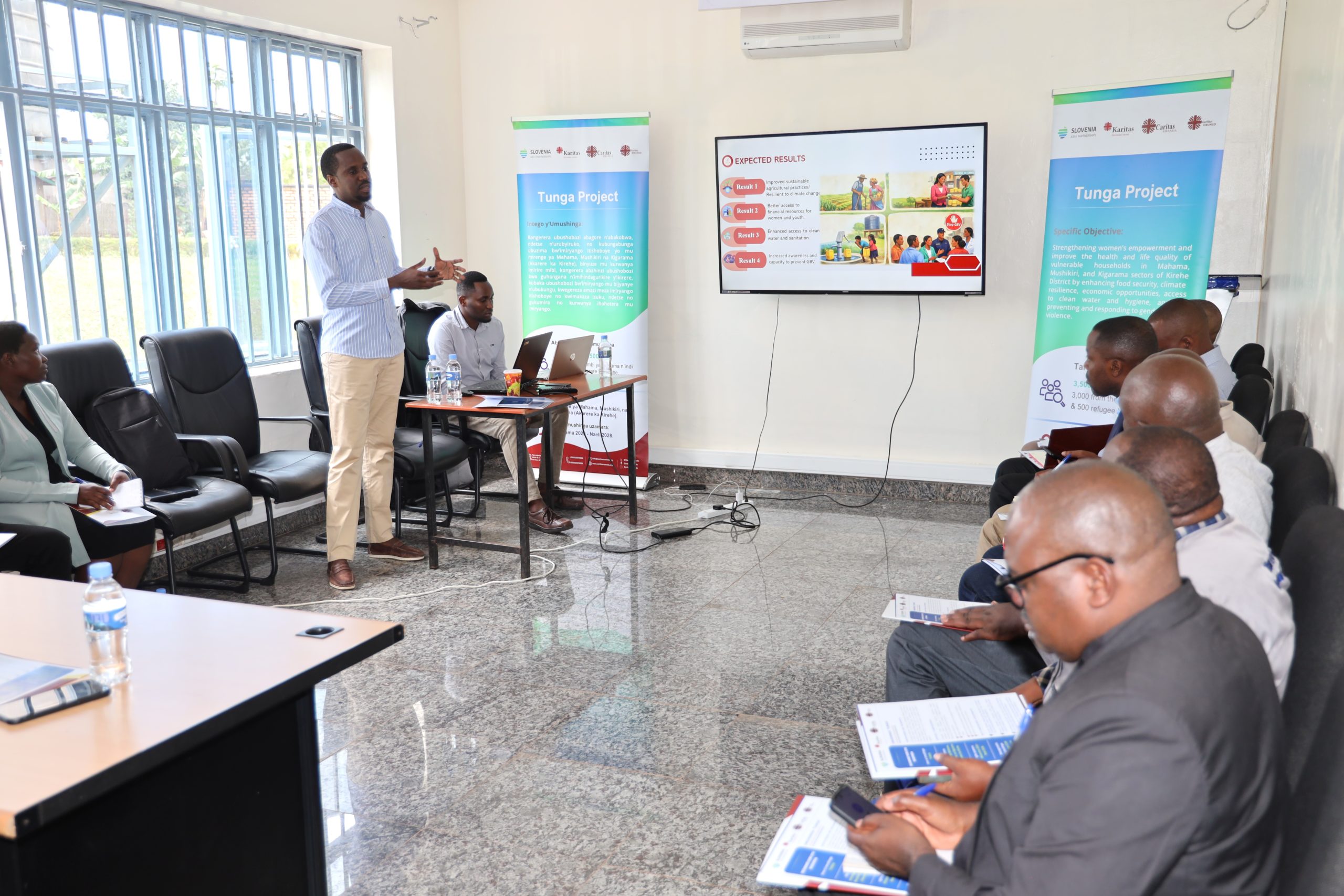
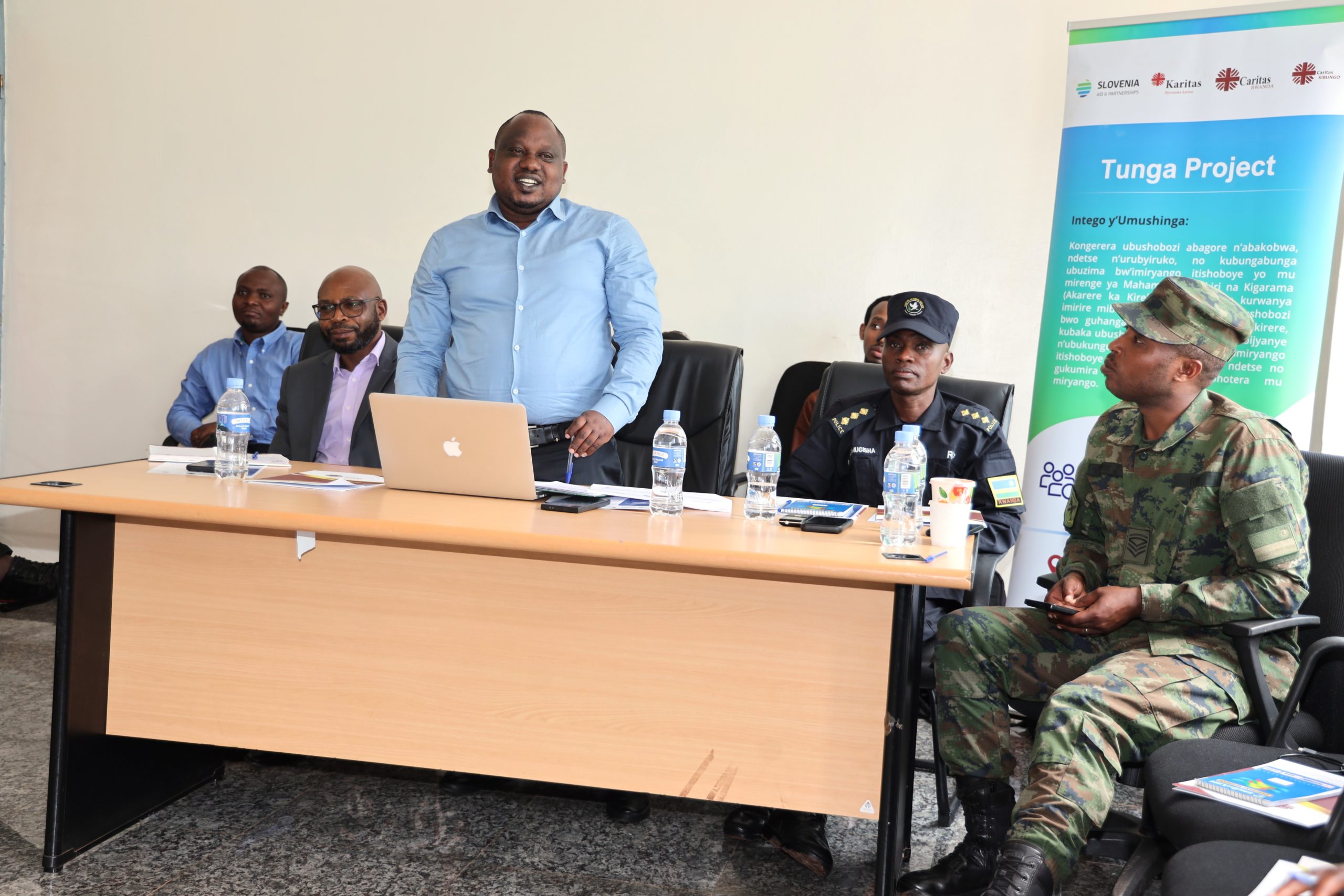
Participants express strong interest in the Tunga Project by asking questions
Following the presentation of planned activities, participants asked several questions, including how project participants will be selected, if the project will collaborate with the Water and Sanitation Corporation (WASAC), and whether owning large plot of land would be considered during participants selection.
In response, the Tunga Project staff and the Caritas Rwanda team explained that participants selection would be carried out in close collaboration with local authorities, with priority given to the most vulnerable households. They confirmed that the project would work with WASAC to improve access to clean water and that discussions had already begun. Regarding land size, they clarified that owning large plots of land was not a requirement, as project participants are vulnerable households who would apply modern farming techniques even on small plots.
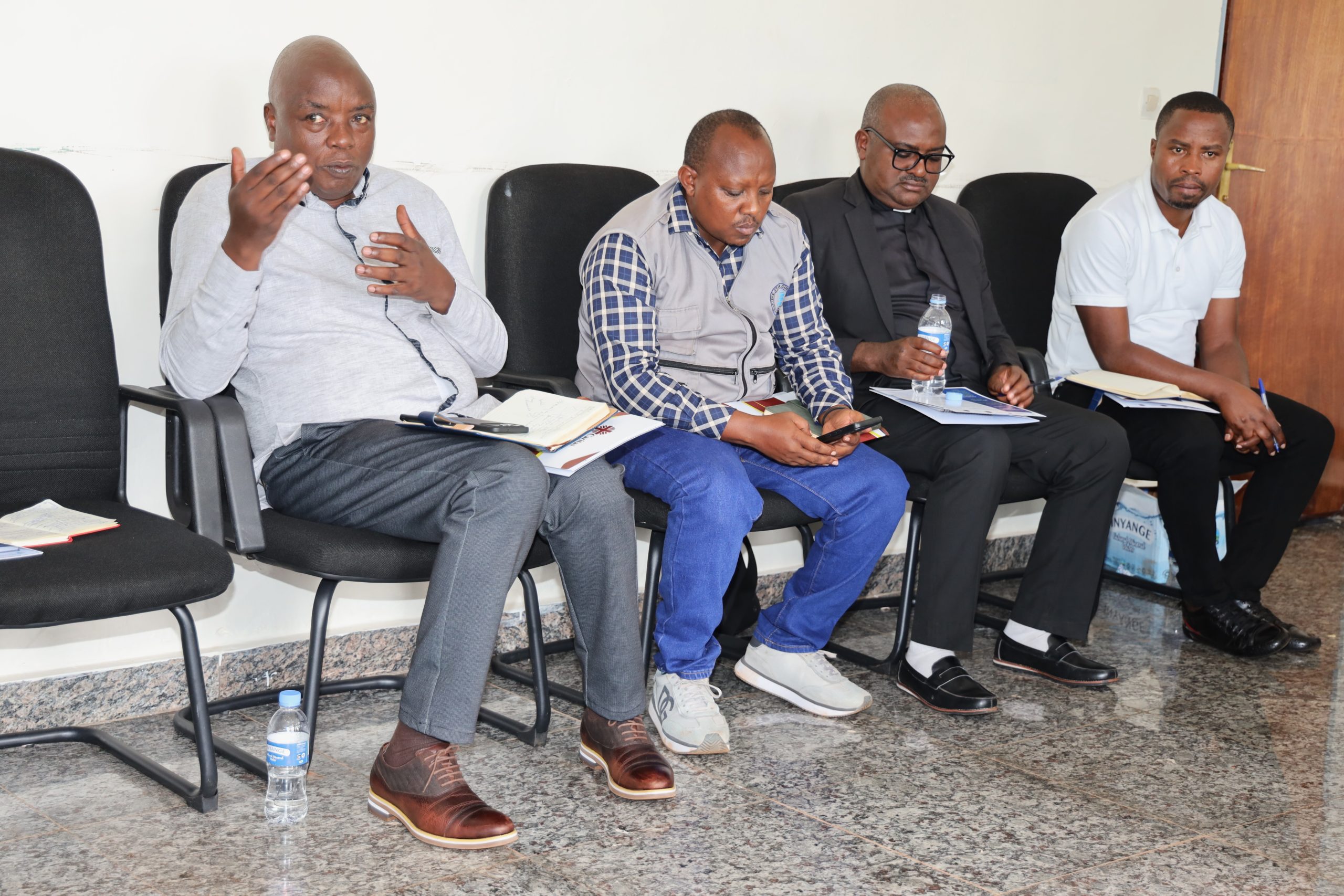
Participants also raised concerns about how some activities, such as water supplies, would benefit only vulnerable households while being public in nature. The project team explained that although vulnerable households are the primary target, some infrastructure investments would also benefit the wider community.
On the issue of refugees lacking access to farmland, the project team explained that demonstration plots would be established where project participants could learn and practice improved farming techniques. Refugees would also have the opportunity to rent land outside the camp to apply the skills acquired.
Partnership: A key factor for project success
In his remarks, Prosper Sebagenzi, Program Director at Caritas Rwanda, praised the strong partnership between Caritas Rwanda, Kirehe District, and local authorities, emphasizing that such collaboration is essential for the effective implementation of the Tunga Project. He expressed confidence that the support provided would lead to meaningful and sustainable results.
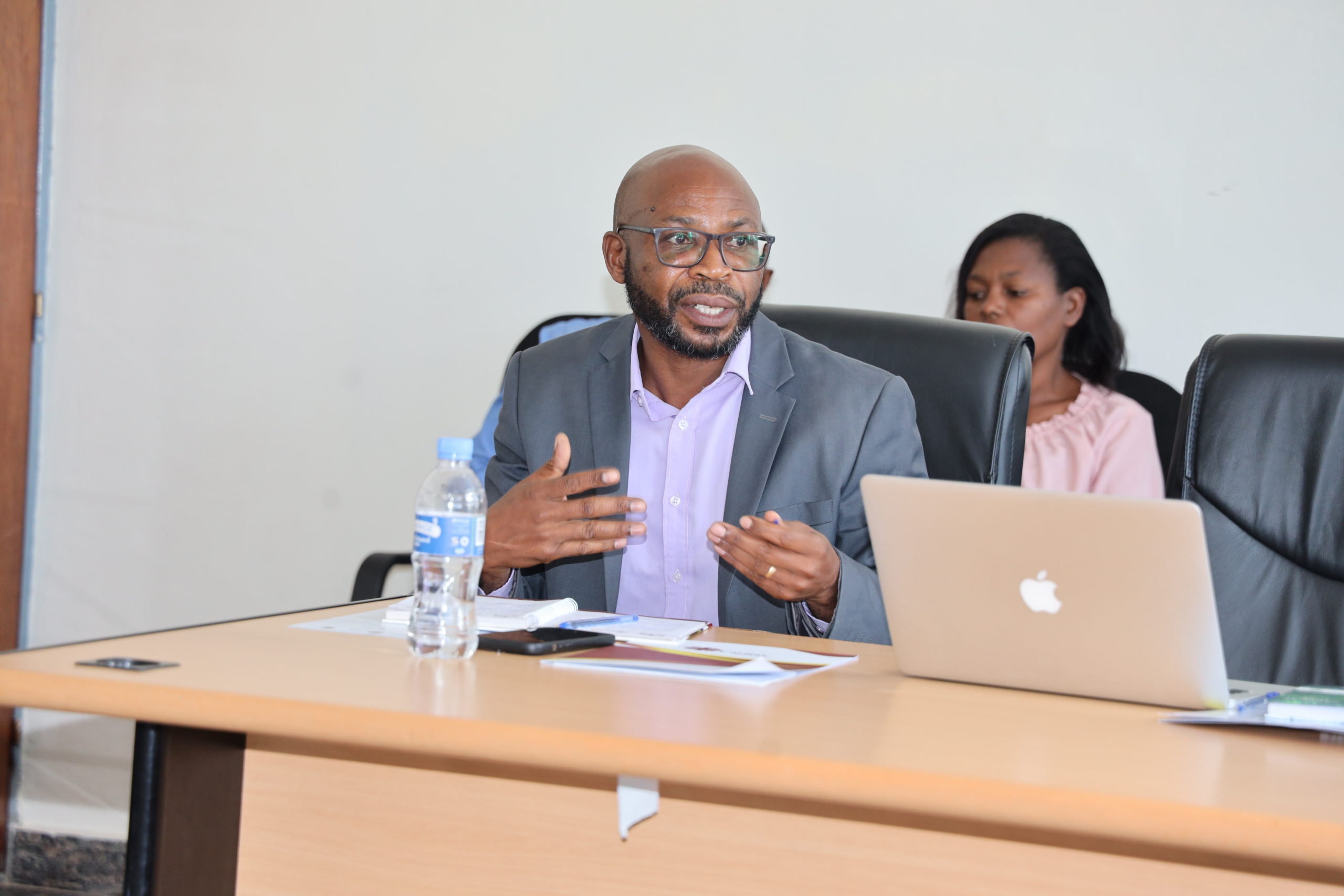
He also referred to Pope Francis’ encyclical Laudato Si’, which calls on humanity to protect the environment and consider the wellbeing of future generations. In this context, the Tunga Project was designed with environmental protection and sustainability at its core.
The acting Executive Secretary of Kirehe District, Mr. Joel Ndayambaje, stated that projects implemented by the Catholic Church are trusted at a rate of “90%,” expressing strong confidence in the success of the Tunga Project. He pledged full cooperation from district authorities and security organs, saying: “As local leaders, we assure you of our full support. Provide us with the planned activities so that we can jointly monitor their implementation.”
He further noted that, if successful, the Tunga Project would significantly contribute to Kirehe District’s achievements of national development targets under the Second National Strategy for Transformation (NST2, 2024–2029).