

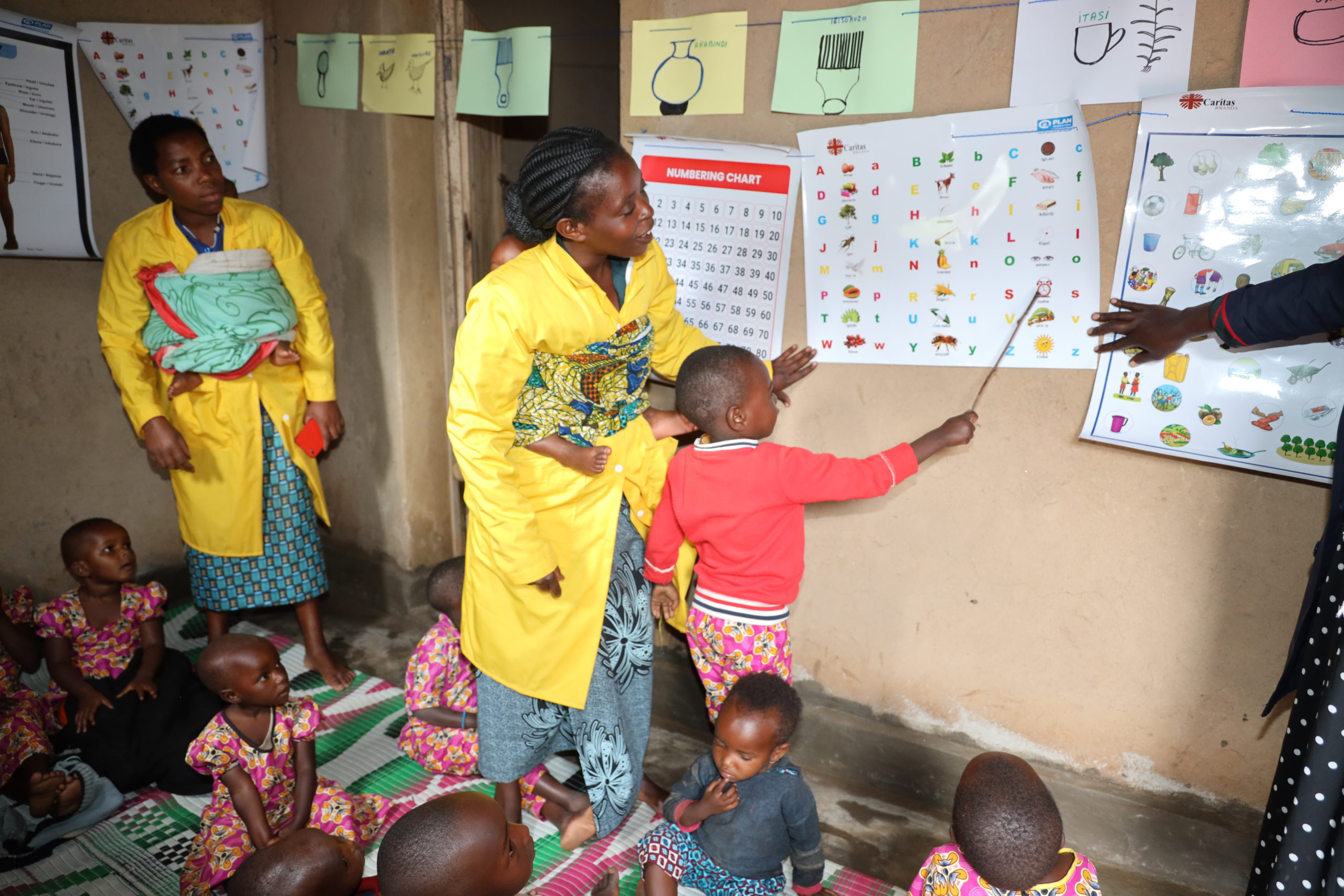
Parents in Nyaruguru District, Southern Province of Rwanda, whose children attend Home-Based Early Childhood Development (HBECD) supported by Caritas Rwanda in partnership with Plan International Rwanda, say the support provided has significantly improved the quality of care and learning for young children, making these HBECD a model to follow.
Through this partnership, Caritas Rwanda delivers comprehensive support to HBECD, including the improvement of learning environments, provision of learning materials for children and caregivers, hygiene supplies, and early literacy tools. Caregivers and parents are also trained in childcare, nutrition, hygiene practices, and how to make learning toys using locally available materials.
Beyond training, the HBECD receive fortified porridge flour, cooking and feeding utensils such as saucepans, cups, and plates, water tanks and drinking water filters, mattresses and mats for children, and small incentives for caregivers and parents who look after children on daily basis. These ECDs operate within community homes (HBECDs), where families voluntarily host children, creating a safe and nurturing environment.
Mukahigiro Beatha, a caregiver at Kurujyejuru HBECD in Giheta Cell, Munini Sector, says the training has transformed how children grow and learn. She explains that children now receive balanced diets, including vegetables, which has helped eliminate cases of malnutrition. She also highlights how homemade toys stimulate children’s thinking skills, adding that the HBECD has become a reference point in the community.
Marthe Muhimpundu, another caregiver at Kurujyejuru B, notes that although children may initially struggle to adapt, training has equipped caregivers with skills to help children socialize, play, and feel comfortable. She emphasizes that children who attend HBECD develop better cognitive skills, learn to count up to ten, recognize shapes, and integrate easily into nursery school.
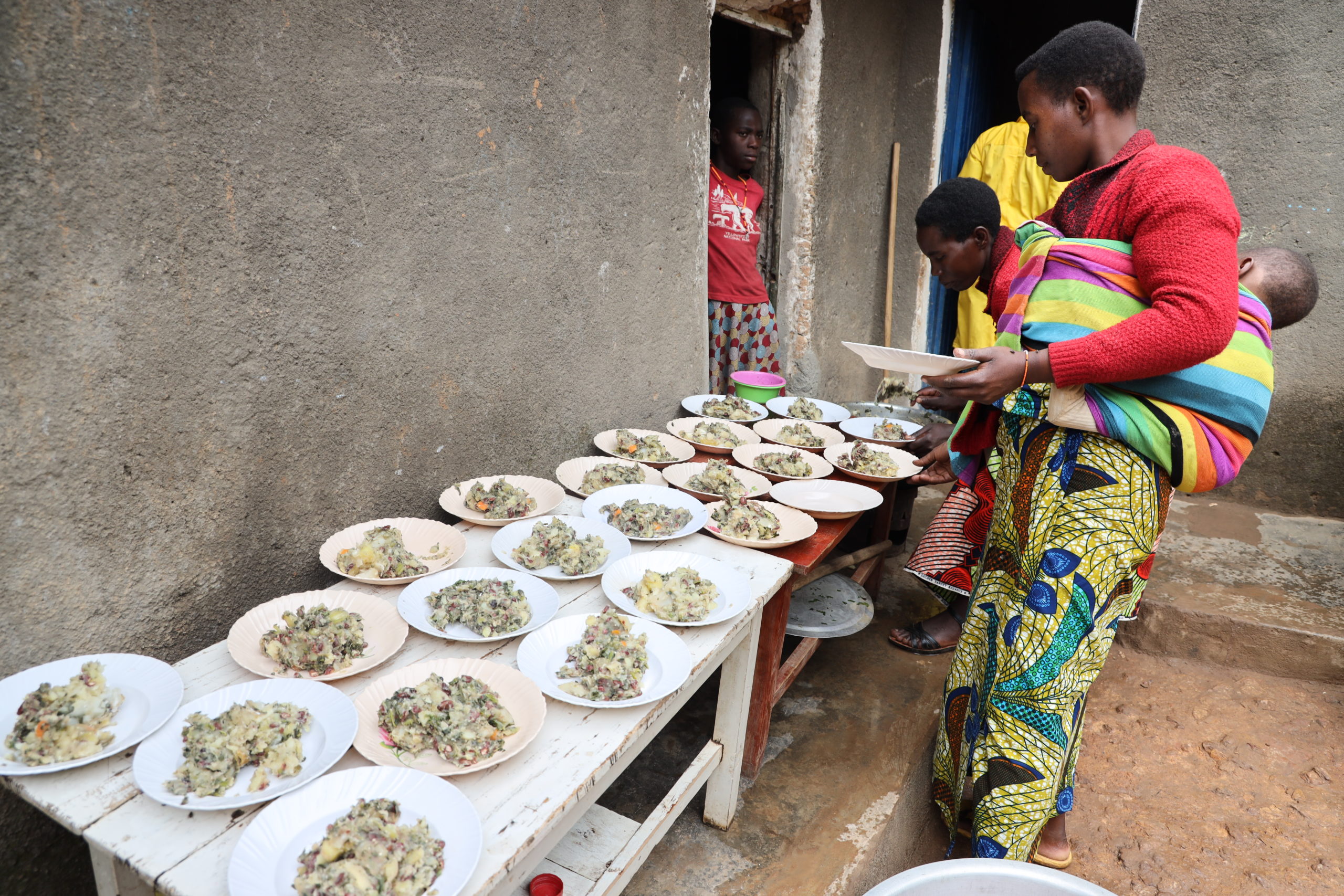
Male involvement has also increased. Ndatsikira Innocent, a trained male caregiver at Inyange ECD in Munini Sector, says the training helped him overcome the belief that childcare is only for women. He now confidently feeds, cleans, and cares for children both at home and at the HBECD, encouraging other men to actively participate in raising children.
For parents like Akimana Angelique, a tailor, HBECD provide peace of mind and economic opportunity. “Knowing my child is safe allows me to focus on my work and increase productivity, something that would be difficult if I stayed home caring for my child”, says Angelique.
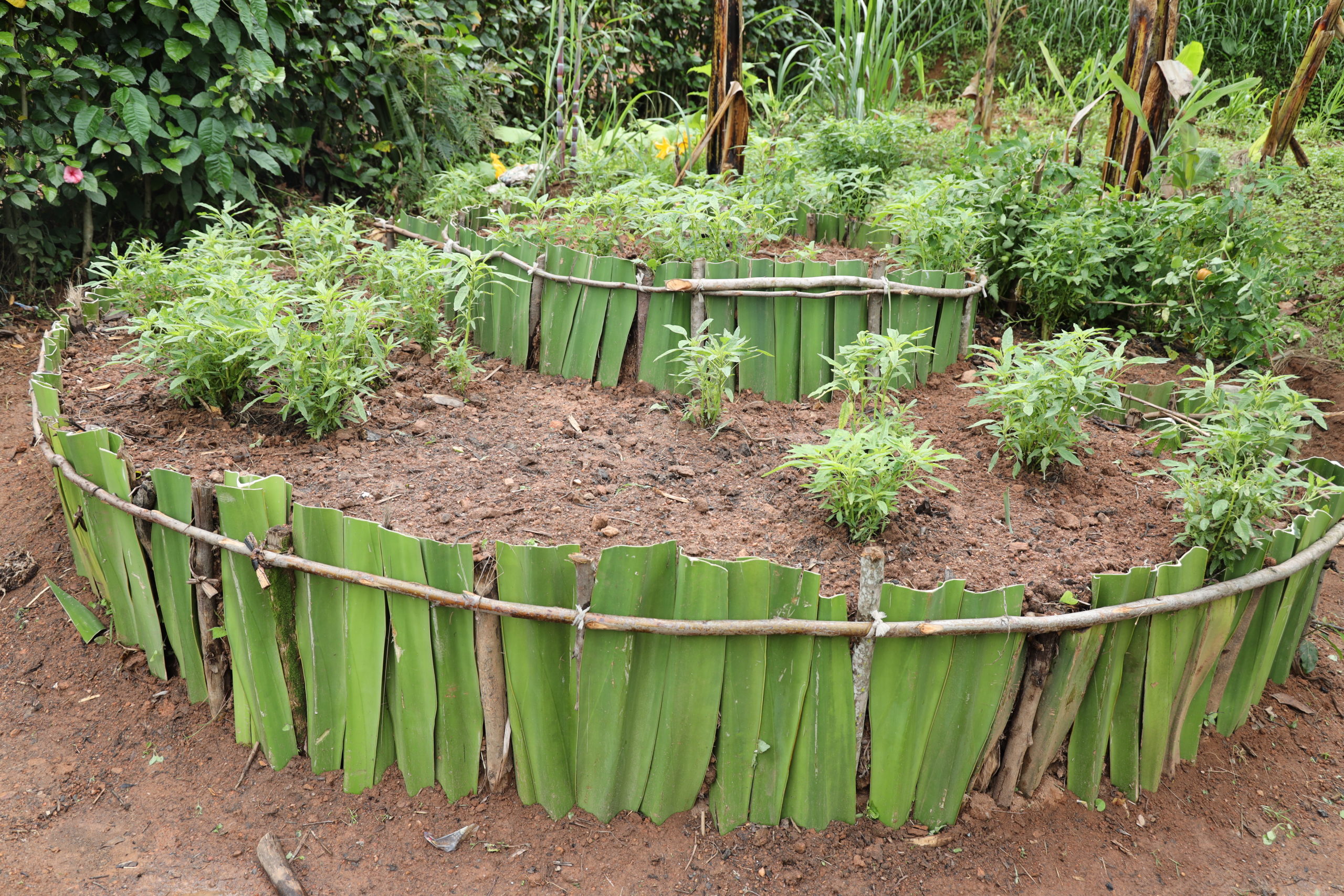
Each HBECD also maintains a kitchen garden, developed with support from parents and ECD Project staff. These gardens supply vegetables for children’s meals while enabling parents to learn modern farming techniques they can replicate at home.
According to Ntakirutimana Donatha, the Munini Sector officer in charge of ECD and nutrition, HBECD supported by Caritas Rwanda and Plan International Rwanda stand out due to the professionalism of trained caregivers, adequate equipment, and regular follow-up visits, which ensure that challenges are addressed promptly.
In Nyaruguru District alone, the Caritas Rwanda’s ECD Project supported by Plan International Rwanda oversees 26 HBECD, serving 601 children (290 boys and 311 girls).
The Secretary General of Caritas Rwanda, Fr. Oscar Kagimbura, notes that with increased resources, the project could be expanded nationwide. Currently, Caritas Rwanda implements ECD activities in Nyaruguru, Bugesera, and Gatsibo districts, in collaboration with Plan International Rwanda and the National Child Development Agency (NCDA) through diocesan Caritas structures across the country.
Between 2014 and 2024, Caritas Rwanda supported over 45,000 ECDs, reached nearly 1.8 million children, rehabilitated thousands of malnourished children through improved nutrition, and trained more than 2.5 million caregivers on the six pillars of early childhood development, contributing significantly to child well-being and school readiness nationwide.