

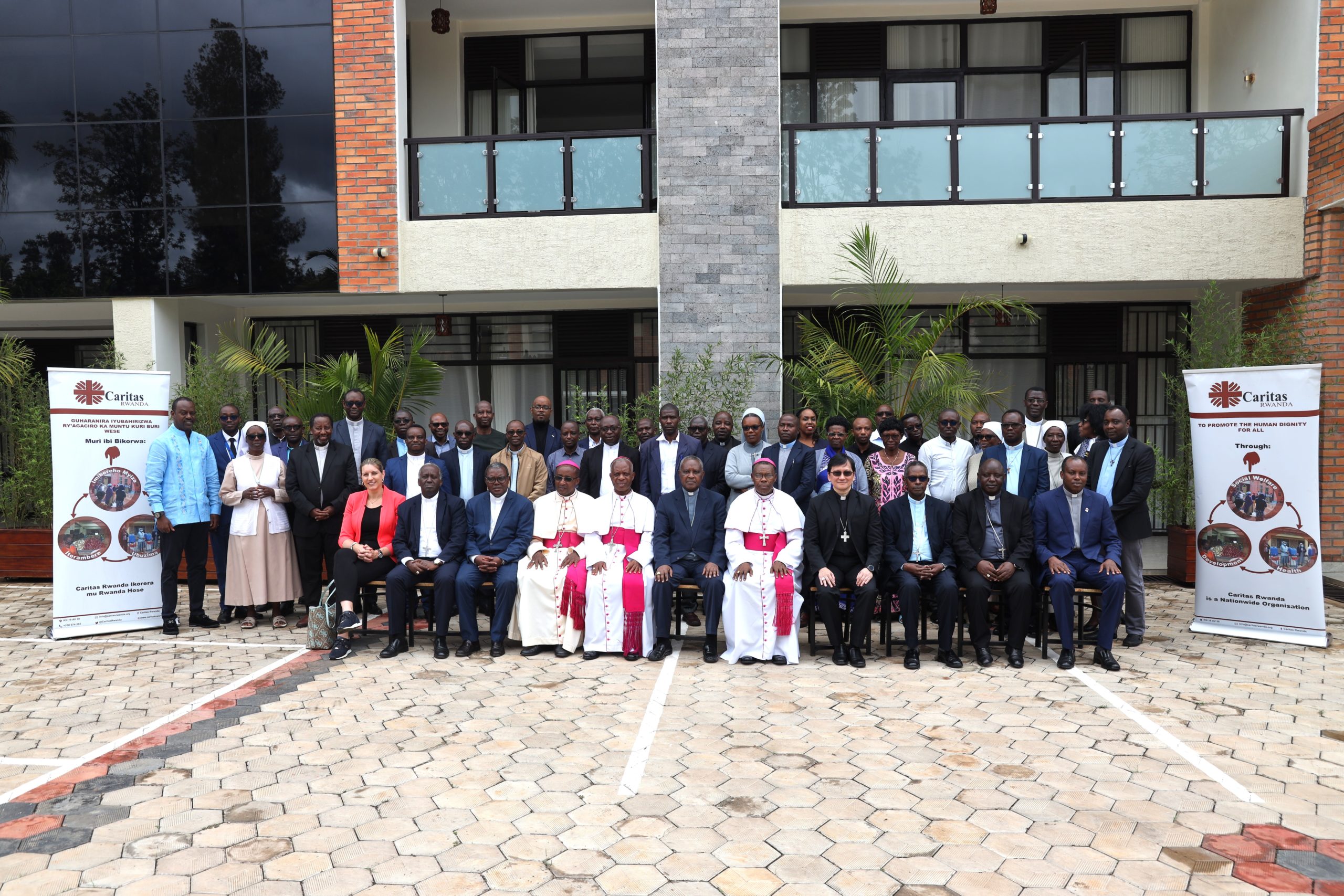
The 29th General Assembly of Caritas Rwanda was held at Centre Saint Vincent Pallotti-Gikondo from March 23 to 24, 2026. The assembly reviewed the 2025 achievements, established priorities for 2026, and reinforced the Caritas family’s dedication to serving the most vulnerable.
In his opening remarks, H.E. Bishop Anaclet Mwumvaneza, President of Caritas Rwanda and Bishop of Nyundo Diocese, emphasized that the accomplishments of 2025 are the result of strong collaboration with stakeholders, including the Government of Rwanda, Caritas Rwanda program participants, as well as technical and financial partners.
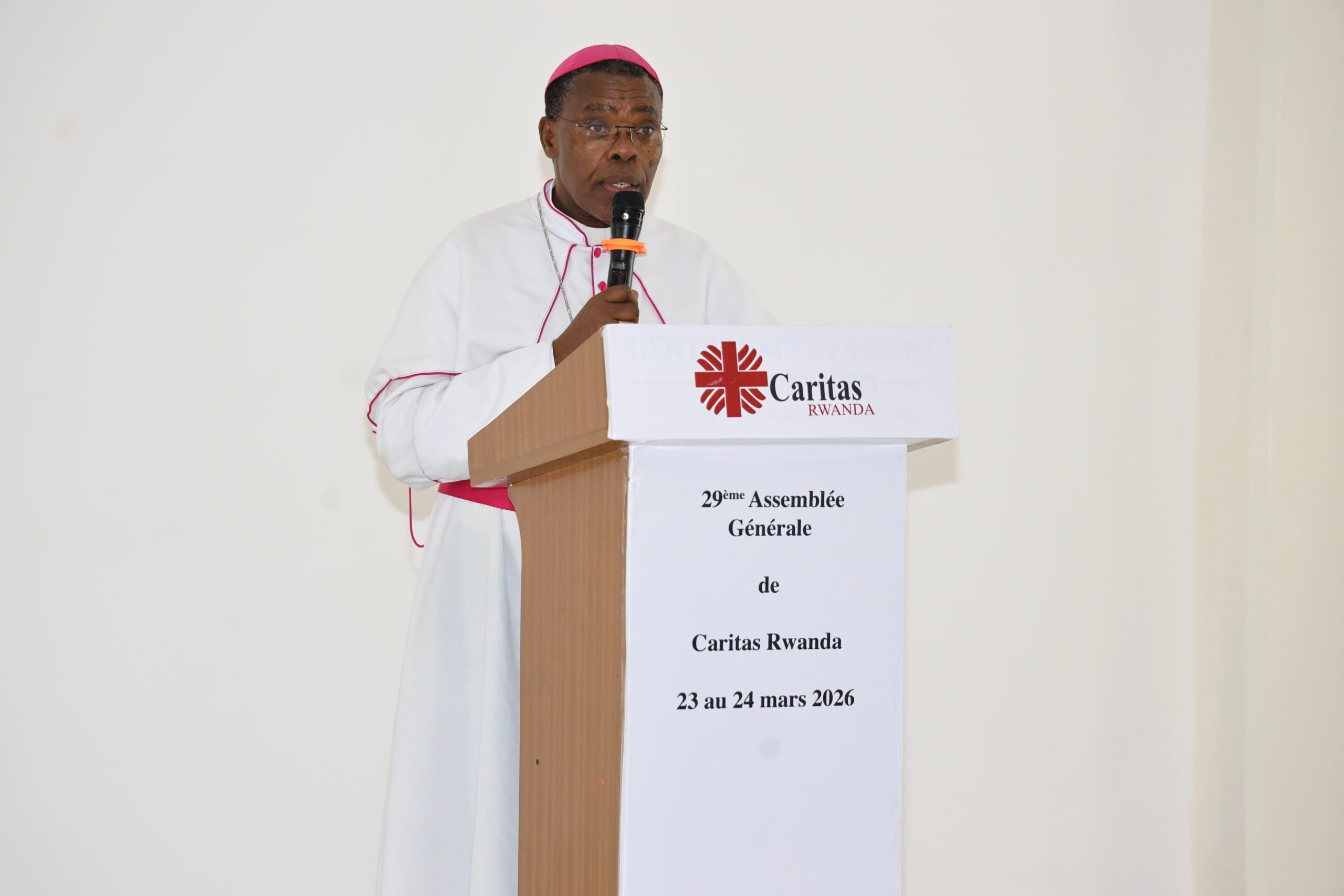
Bishop Anaclet Mwumvaneza also stressed the need to strengthen local financial autonomy and community engagement to ensure sustainable and rapid interventions in support of the most vulnerable.
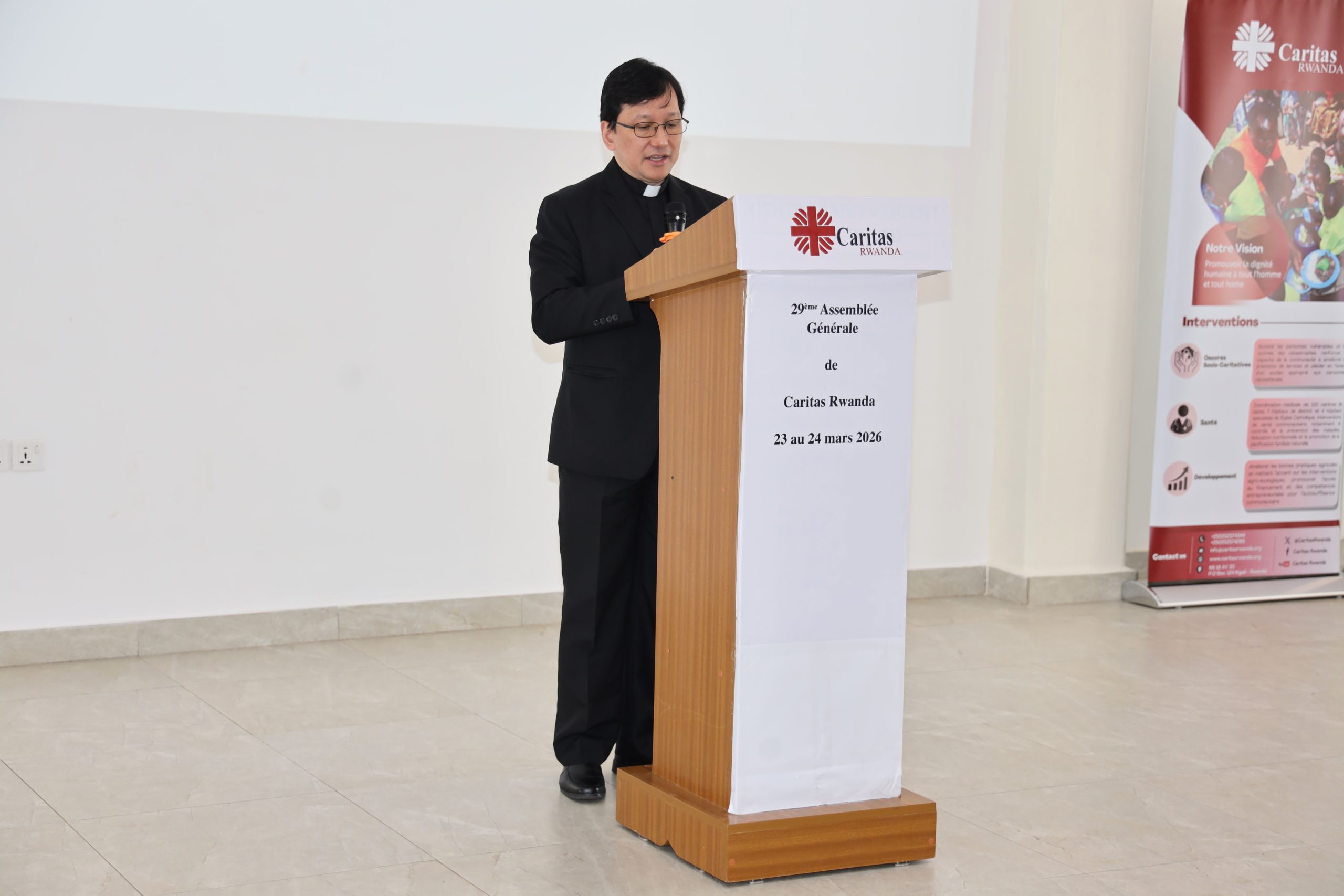
In his address, H.E. Bishop Arnaldo Sanchez Catalan, the Apostolic Nuncio to Rwanda, invited Caritas Rwanda to root its mission in the three fundamental pillars highlighted by Pope Leo XIV: peace, justice, and truth[1]. He noted that peace should not be understood merely as the absence of conflict, but as a living reality that transforms individuals and communities. Justice, he added, is inseparable from peace and requires concrete efforts to address growing inequalities and uphold the dignity of the most vulnerable. Truth, meanwhile, remains essential for building authentic relationships, especially in a world marked by ambiguity and artificial realities.
One of the highlights of the Assembly was the presentation of the 2025 activity reports across four departments: (i) Administration and Finance, (ii) Social Welfare, (iii) Health, and (iv) Development. These sessions provided an opportunity to assess progress made in 2025, share successes, and analyze challenges encountered. Participants actively engaged in discussions, demonstrating a strong commitment to transparency, accountability, and continuous improvement.
Although 2025 was marked by a reduction in external funding (a 16% budget decrease and a 25% reduction in staff), Caritas Rwanda expressed satisfaction at having regained a positive trajectory. Its projected budget has increased thanks to new projects funded after the 2025 crisis.
Regarding the Month of Charity 2025, a total of Rwf 239,508,573 was collected. The Diocese of Ruhengeri ranked first with Rwf 48,853,604, followed by the Diocese of Nyundo with Rwf 40,373,726.
During the Assembly, the 2026 operational plan was also presented by departments. Each department presented its priorities and strategies, leading to constructive discussions aimed at strengthening the impact and coordination of activities for 2026.
The second day was dedicated to exchanges focused on reinforcing the commitment of the Caritas family to serving the most vulnerable. Following
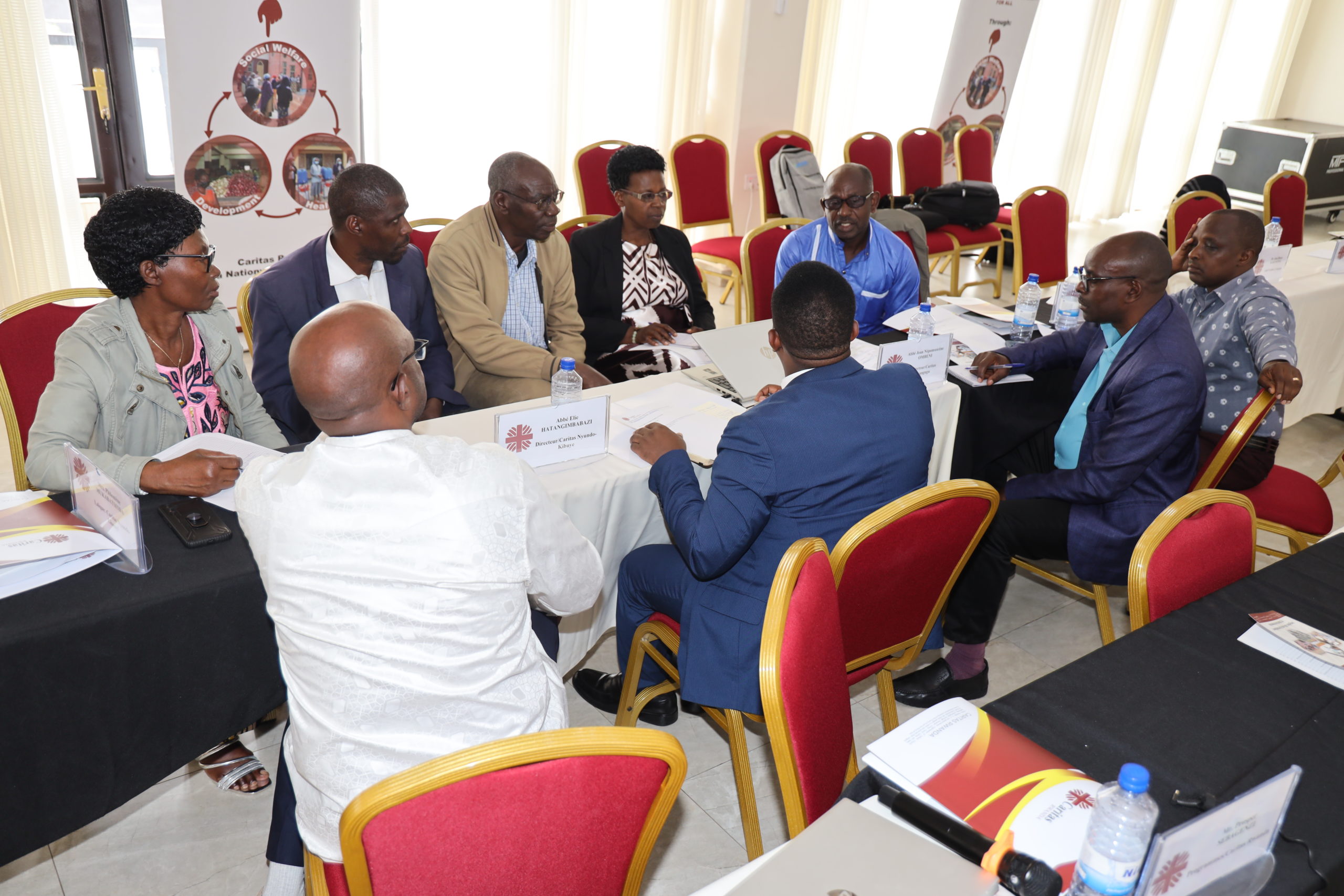
, the General Assembly formulated recommendations.
Brief overview of the General Assembly’s recommendations
The recommendations from the 29th General Assembly of Caritas Rwanda place particular emphasis on strengthening collaboration and synergy among the various structures of the Church. Specifically, the Episcopal Conference of Rwanda (CEPR) and Caritas Rwanda are asked to consolidate joint work between commissions, episcopal services, and diocesan Caritas, in a spirit of synodality, to ensure more rational resource management and better coordination of actions in support of integral human development. Harmonizing the legal framework for collaboration and disseminating best practices within the Caritas network are also identified as essential levers for increasing the effectiveness of interventions.
Furthermore, the Assembly stressed the importance of strengthening institutional sustainability through innovative resource mobilization strategies. Caritas Rwanda and the diocesan Caritas are encouraged to explore new funding opportunities, enhance the value of their investments, and promote a culture of self-financing. Developing a culture of auditing and diversifying fundraising mechanisms, particularly during the Charity Month, is seen as a priority for ensuring these initiatives’ sustainability.
Finally, the recommendations emphasized strengthening Caritas’ pastoral and social mission within communities. This includes operationalizing chaplaincy services in correctional facilities, providing spiritual support in health facilities, and promoting the Caritas spirit at all levels.
[1] https://www.vatican.va/content/leo-xiv/en/speeches/2025/may/documents/20250516-corpo-diplomatico.html